Right quantity, wrong time or location
An overall correct purchase quantity arrives at the wrong time or the wrong place.
"The batch expired, and the team only found out on the day of disposal."
This sector doesn't need a new system duplicating your ERP or WMS — it needs a view that links what's happening today with what could happen tomorrow, surfacing stockout, disruption and waste risk before it becomes an unmeetable commitment.
Priority isn't just the highest number.
Keeper ranks signals by the amount at risk and the time remaining before action becomes impossible.
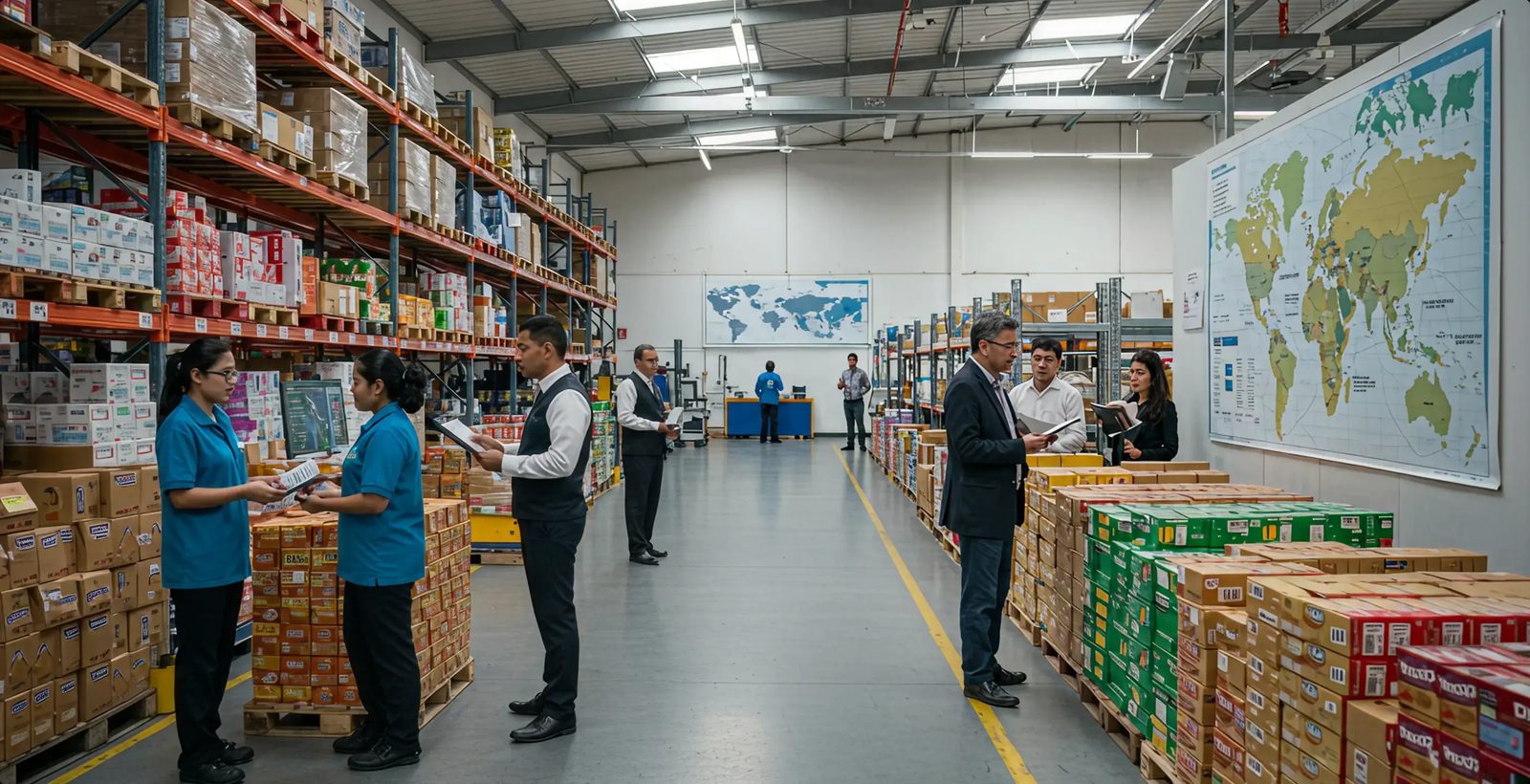
These losses don't always mean the team made the wrong call. Often it was the best decision given the information available at the time — but the important signals were scattered or surfaced too late to act.
An overall correct purchase quantity arrives at the wrong time or the wrong place.
Near-expiry batches pile up in one warehouse while real demand for them exists elsewhere.
Purchasing plans that don't account for season, promotions, weather and events raise forecast error.
The aggregate number looks reassuring while the SKUs that matter most run out at the customer.
Expiry risk is often discovered after the window for economical intervention has closed.
Production plans don't always balance available materials against their remaining shelf life.
Your ERP, WMS and specialized systems hold records, transactions and official plans, and may offer advanced analytics. Keeper doesn't replace or duplicate these capabilities; it links context across systems and sources, surfaces exceptions early, compares handling options, and ranks decisions by their financial and operational impact.
| Question | Your current system | With Keeper |
|---|---|---|
| Reorder point | A threshold reviewed periodically per planning rules | Reviewed automatically as season and supplier performance change |
| Slow-moving SKUs | A report pulled on demand | A list arrives with the exposed value and a liquidation option |
| Margin | Calculated within the accounting cycle | Estimated before the purchase decision is made |
| Supplier delay | Logged after it happens | Anticipated in advance with a ready alternative for comparison |
| Customer delivery date | Recorded in the sales order | An early alert if the SKU won't arrive on time |
Keeper starts with a read-only connection by default. Draft creation, transactions or messages can be enabled through defined integrations and permissions and approval paths agreed with the company. Keeper takes no action outside authorized and logged boundaries.
Of the Keeper team, these agents carry the heaviest load in this sector. Meet the full team →
Operations aren't copied into a replacement system; data is read from agreed sources and unified in an analytical layer, starting with core sources and expanding over time.
Batch/Lot, and production and expiry dates for each batch.
Remaining shelf life on arrival and the minimum acceptable age at delivery.
Waste causes: expiry, damage, or planning gaps.
Demand by SKU and location, plus promotions, seasons and events.
When sensors or refrigerated/frozen transport and storage logs are available.
Supplier lead times and actual performance versus agreed terms.
Priority differs between a shelf-life-bound SKU and a slow-moving one. Every recommendation shows its data, its reasoning and its next step.
Analyzes demand by SKU, location and period, linking shifts to seasons, promotions and known events.
Flags batches that may not sell through before their date, and suggests a transfer, faster sale, or purchase adjustment.
Chooses the best location for each batch based on age, demand, transit time and receiving terms.
Links waste to its cause, supplier, location and prior decisions, making improvement preventive.
We don't just show a chart, but a single position: which SKU, what it's worth in SAR, and the fastest option to move it — under your approval.
Every recommendation is linked to its data source, last update time, assumptions, and confidence range.
Situations that recur in every wholesale warehouse: stock nearing expiry, a customer whose order changed, and a supplier who's late — each with a ready action.
A daily list ranked by value and remaining shelf life, with the best channel to liquidate each batch.
Raises coverage early only for SKUs whose history proves a seasonal spike.
Flags any supplier delivering with less remaining shelf life than agreed and factors it into the evaluation.
The right metric varies by sector. Success is measured by what happens to your capital: how much is freed from slow-moving stock, and how much stockouts drop at your customers.
Showing limits builds trust: Keeper relies on the quality of its sources and preserves human approval for sensitive decisions.
Priority goes to the nearest expiry when SKU rules allow.
Transfers, discounts or orders remain under your authority.
Temperature monitoring is never claimed without a reliable data source.
Every alert shows the exposed value and the proposed action.
Direct links to those who set the rules in your field. Once live, Keeper is calibrated to your policies and business reality.
The core capabilities are shared, but the signals, priorities and decision actions change fundamentally.
| Comparison point | Keeper | Global platforms |
|---|---|---|
| Where it sits | An intelligence and operations layer above existing systems | Broad planning and execution platforms that vary by vendor |
| Starting point | A focused, sector-specific use case | A specific module or a wider transformation program |
| Localization | Arabic experience, Saudi context and local support | Localization level varies by platform and partner |
| Rollout | Fully operational within two weeks after data and agreed integrations are complete | Varies by scope, data and integration |
| Pricing | Clear packages with defined additional ranges | Usually custom pricing |
| Core advantage | Proximity, flexibility, local context and decision linkage | Global breadth and depth of enterprise functionality |